How to Monetize Your Newsletter: 7 Proven Strategies (Sponsorships, Paid Subs, Affiliate)
You have an audience. They open your newsletter, read what you send, and trust your recommendations. That trust is worth something. But right now, you’re leaving money on the table.
Most newsletter creators focus on growing their list and forget the second half of the equation: monetization. You can have 10,000 engaged subscribers and still earn nothing from them if you haven’t built a revenue system.
Here’s the thing. Monetizing a newsletter isn’t about stuffing ads between paragraphs or begging for donations. It’s about matching the right revenue model to your audience, your niche, and your content strategy. If you’ve been looking for ideas, our roundup of newsletter monetization tips covers the full landscape.
You’ll find that the most successful newsletter creators use a combination of revenue streams. Sponsorships, paid subscriptions, affiliate commissions, digital products, and premium communities. Each one works differently, and the best approach depends on what you’re working with.
This guide walks you through seven proven strategies for monetizing your newsletter. Some are passive, some require more effort. Some work better for large audiences, others are perfect for niche newsletters with just a few hundred subscribers.
Let’s get into it.
The 7 Newsletter Monetization Strategies at a Glance
Before we dive into each strategy, here’s a quick overview of all seven approaches covered in this guide:
- Newsletter Sponsorships
- Paid Subscriptions
- Affiliate Marketing
- Digital Products
- Premium Communities
- Consulting and Services
- Newsletter Cross-Promotions
Now let’s break down each strategy with real examples and implementation details.
Key Takeaways
- You can start monetizing a newsletter with as few as 500 engaged subscribers
- Newsletter sponsorships typically pay $20-$50 CPM (cost per thousand subscribers)
- Paid subscriptions convert at 5-10% of your free subscriber base
- Affiliate marketing works at any list size with no minimum requirements
- Digital products have nearly 100% profit margin since you create once and sell forever
- Premium communities charge $29-$99/month for exclusive access
- Layering multiple revenue streams is the path to $10,000+/month
What You’ll Learn in This Guide
- How to price and land your first newsletter sponsorship
- Which platforms work best for paid subscriptions (Substack vs Ghost vs Beehiiv)
- How to set up affiliate marketing without sounding salesy
- Step-by-step process for creating and selling digital products
- How to build and monetize a premium community
- Pricing frameworks for consulting and high-ticket services
- Where to find cross-promotion partners and how to price them
Strategy 1: Newsletter Sponsorships (The Most Common Path)
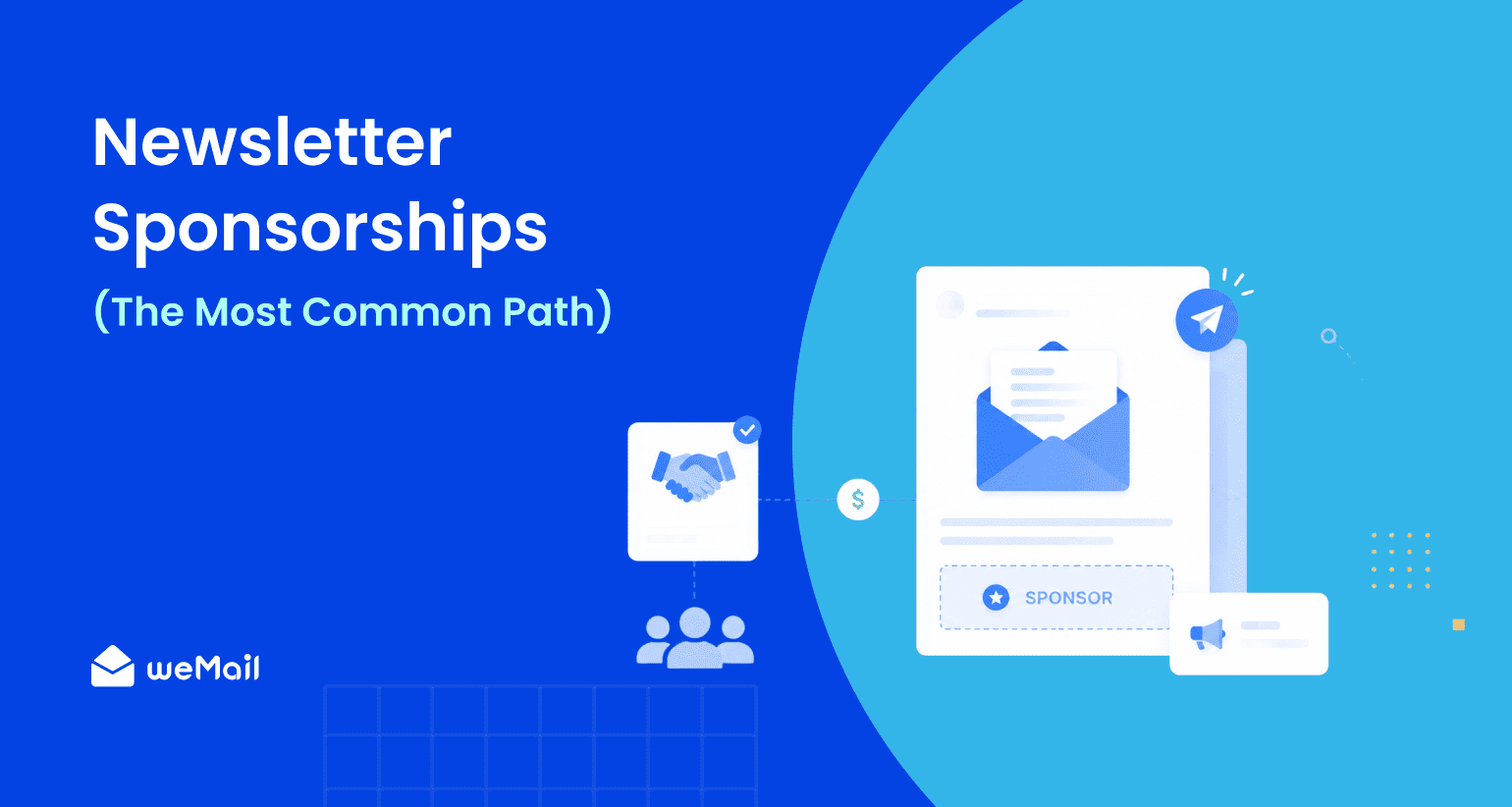
Sponsorships are the bread and butter of newsletter monetization. A brand pays you to mention their product or service in your newsletter. Simple concept, proven results.
The key to landing sponsorships is demonstrating that your audience is engaged and reachable. You don’t need a massive list to attract sponsors. A niche newsletter with 2,000 highly targeted subscribers can be more valuable than a general newsletter with 20,000 passive readers.
Here’s how sponsorship pricing typically works. Most newsletters charge a CPM (cost per thousand) rate. The industry standard ranges from $20 to $50 CPM for niche newsletters, and $10 to $25 for broader audiences. If you have 5,000 subscribers at a $30 CPM, that’s $150 per sponsored placement.
To get started, you need a media kit. This is a simple one-page document that includes your subscriber count, open rate, audience demographics, and sponsorship options. Most newsletter creators offer three tiers: a dedicated email, a featured placement, and a brief mention.
Finding sponsors is easier than you might think. Start by reaching out to brands your audience already uses. Check out newsletter sponsorship marketplaces like Swapstack, Sparkloop, and Paved. These platforms connect newsletter creators with advertisers actively looking for placements.
The best part? Once you land your first sponsor and deliver results, they often come back for repeat placements. Sponsorship revenue compounds over time as your list grows. And if you need help growing that list first, check out our guide on how to grow newsletter subscribers.
Real-world example with weMail: Let’s say you run a WordPress marketing newsletter using weMail. You have 3,000 engaged subscribers — mostly small business owners and bloggers. A plugin company like an SEO tool or page builder approaches you for a sponsorship. With weMail’s built-in analytics, you can show them your exact open rate (say, 42%) and click-through rate. You create a dedicated campaign in weMail, write a genuine recommendation, and track every click through weMail’s campaign reports. The sponsor sees real data, you earn $90 for that single placement (3,000 subs × $30 CPM), and your audience gets a useful tool recommendation.
Strategy 2: Paid Subscriptions (The Premium Model)
Some of the most successful newsletters in the world are paid. Substack creators earn millions from subscription models. The concept is straightforward: your free newsletter builds the audience, your paid newsletter delivers premium value.
The challenge with paid subscriptions is that you need to offer something genuinely worth paying for. This could be deeper analysis, exclusive interviews, early access to content, or a private community. The free tier gives readers a taste. The paid tier delivers the full experience.
Most successful paid newsletters convert between 5% and 10% of their free subscribers. If you have 5,000 free subscribers and convert 7% at $8/month, that’s $2,800 per month in recurring revenue. Not bad for content you’re already creating.
The platforms for paid newsletters are well-established. Substack takes a 10% cut of revenue. Ghost offers more customization with no revenue share. Beehiiv provides advanced analytics and growth tools. Choose the one that fits your technical comfort level and branding needs.
The key decision is what content goes behind the paywall. You don’t want to split your audience or make the free version feel incomplete. Instead, think of the paid tier as an upgrade. Same newsletter, but with bonus content, deeper dives, or exclusive access.
For a complete breakdown of building and scaling a paid newsletter business, check out our guide on email marketing for bloggers.
Strategy 3: Affiliate Marketing (The Low-Effort Revenue Stream)
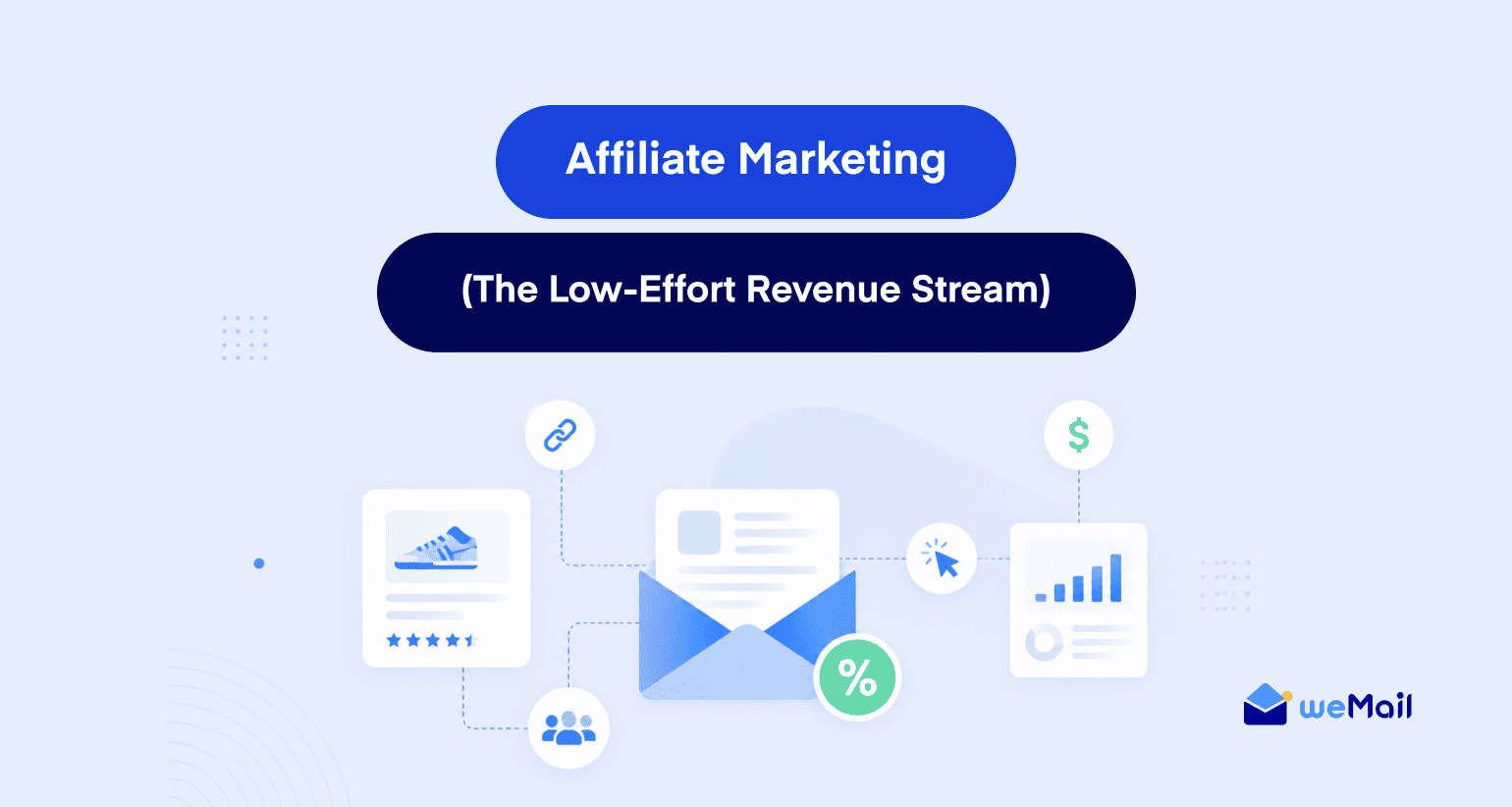
Affiliate marketing is one of the easiest ways to monetize a newsletter. You recommend products your audience uses, include affiliate links, and earn a commission on every sale. No product creation, no customer support, no inventory.
The key to affiliate success is authenticity. Only recommend products you actually use and believe in. Your audience trusts you. If you recommend something just for the commission, they’ll notice, and that trust evaporates.
Here’s how it works in practice. Let’s say you run a newsletter about productivity tools. You write a review of a project management app your audience loves. You include an affiliate link. When a reader clicks through and signs up for a paid plan, you earn a percentage of the subscription.
Affiliate commissions vary widely. Software subscriptions typically offer 20-30% recurring commissions. Physical products range from 3% to 15%. The highest-paying programs are usually in the software and education space. If you’re just starting out, our guide on building an email list for affiliate marketing walks through the fundamentals.
Amazon Associates is the most well-known program, but not always the most profitable. Look for affiliate programs directly through the companies whose products you recommend. Many offer higher commission rates than Amazon.
Track your affiliate links carefully. Most programs provide a dashboard where you can monitor clicks, conversions, and earnings. Use this data to optimize which products you recommend and where you place the links in your newsletter.
weMail affiliate example: Here’s a practical setup. You write a newsletter about email marketing best practices. In your latest issue, you review weMail’s automation features. You include your affiliate link. A reader clicks through, signs up for weMail Pro, and you earn recurring commission every month they stay subscribed. With weMail’s WordPress-native setup, your readers don’t need to leave their dashboard — they install the plugin, connect their account, and start sending campaigns immediately. That frictionless experience means higher conversion rates for your affiliate links.
Strategy 4: Digital Products (The Highest Margin Option)
If you want maximum revenue per subscriber, digital products are the way to go. Ebooks, courses, templates, toolkits. You create it once and sell it forever. No shipping, no inventory, nearly 100% profit margin.
The advantage of digital products is that you already have the expertise your audience is paying for. They read your newsletter because they trust your knowledge. Packaging that knowledge into a product is a natural next step. Learning how to create lead magnets is a great starting point since the same principles apply to digital product creation.
Here’s a practical example. You run a newsletter about email marketing. Your audience is full of small business owners trying to improve their email campaigns. You could create an ebook on advanced email segmentation strategies, a template pack with proven email sequences, or a video course on email marketing for WordPress.
Pricing depends on the depth of the product. A simple ebook might sell for $19 to $29. A comprehensive course could command $99 to $299. The key is delivering genuine value that saves your audience time or helps them earn more.
You don’t need a fancy platform to sell digital products. Gumroad, Lemon Squeezy, and Payhip all handle payments, delivery, and customer management. They take a small percentage of each sale but save you the hassle of building your own checkout system.
For WordPress users, you can sell digital products directly from your site using WooCommerce with a digital downloads plugin. This keeps everything in your ecosystem and avoids platform fees.

Subscribe for email
marketing hacks, free
ebooks, and product updates
Strategy 5: Premium Communities (The Recurring Revenue Play)
Paid communities are becoming one of the most popular newsletter monetization models. Your subscribers pay a monthly fee for access to a private group where they can connect with you and each other.
The community model works because people value connection and accountability. A newsletter is one-directional. A community is interactive. Members ask questions, share wins, and help each other. That interaction creates value that a standalone newsletter can’t match.
Platforms like Circle, Discord, and Slack all work for paid communities. The most successful ones combine a newsletter with a community space, often powered by email automation to keep members engaged. The newsletter delivers weekly insights. The community provides daily interaction and support.
Pricing for premium communities typically ranges from $29 to $99 per month. The lower end works for broader audiences. The higher end works for niche professional communities where members get direct access to expertise and networking opportunities.
The key to community success is moderation and engagement. You need to be active in the community, respond to questions, and create regular discussion prompts. A community that goes quiet loses its value quickly.
Building a community with weMail: Here’s how it works in practice. You run a newsletter about WooCommerce growth using weMail for all your campaigns. You launch a premium community for $49/month. New members get access to your private Slack group plus a weekly “members-only” newsletter sent through weMail’s subscriber segmentation. You tag paying subscribers in weMail, create a separate list for premium members, and automate their onboarding sequence. The newsletter delivers your weekly insights, the community provides daily interaction. weMail handles the segmentation and automation so you can focus on creating value.
Strategy 6: Consulting and Services (The High-Ticket Option)
If you’re an expert in your field, your newsletter is essentially a weekly showcase of your expertise. Some readers will want more than just content. They’ll want to work with you directly.
Consulting and services are the highest-ticket monetization option. A single consulting engagement can earn more than a year of sponsorships. The tradeoff is that it’s not scalable. Your time is limited.
The best approach is to offer a clear service with defined scope and pricing. Don’t leave it vague. Here’s what I offer, here’s what it costs, here’s how to get started.
Include a simple call-to-action at the bottom of your newsletter. Something like: “Want help with [specific problem]? I work with a limited number of clients each month. Here’s how to apply.”
This approach works especially well for newsletters in the business, marketing, and technology space. Readers are already looking for solutions to the problems you write about. You just need to make it easy for them to hire you.

Strategy 7: Newsletter Cross-Promotions (The Growth + Revenue Combo)
Cross-promotions are a unique monetization model. Another newsletter creator pays you to recommend their newsletter to your audience. You get paid, and both lists grow.
This works best when your newsletter and the partner newsletter serve similar but non-competing audiences. If you write about email marketing, you could cross-promote with a newsletter about SEO or content marketing.
Pricing for cross-promotions varies based on list size and engagement. Smaller newsletters (1,000 to 5,000 subscribers) typically charge $50 to $200 per cross-promotion. Larger newsletters can charge $500 to $2,000 or more.
The advantage of cross-promotions is that they’re low friction. You’re not selling a product or service. You’re simply recommending another newsletter your audience might find valuable. It feels natural, and it generates revenue without any ongoing commitment.
Platforms like Swapstack and Sparkloop make it easy to find cross-promotion partners. You can also reach out directly to newsletter creators in your niche. If you need inspiration for your own newsletter design, check out these best free newsletter templates and newsletter header design tips.
Which Strategy Should You Start With?
Here’s a practical framework for choosing your first monetization strategy:
| If Your List Has… | Start With… | Expected Monthly Revenue |
|---|---|---|
| 500-2,000 subscribers | Affiliate marketing | $100-$500 |
| 2,000-5,000 subscribers | Sponsorships + affiliates | $500-$2,000 |
| 5,000-10,000 subscribers | Sponsorships + digital products | $2,000-$10,000 |
| 10,000+ subscribers | Paid subscriptions + sponsorships | $5,000-$50,000+ |
You don’t have to choose just one. The most successful newsletter creators layer multiple revenue streams. Start with the easiest one to implement, get your first dollar flowing, then add more over time.
The biggest mistake newsletter creators make is waiting until they have a huge list before monetizing. If you’re still building your audience, start with how to build an email list with weMail. You can start earning with a list of 500 engaged subscribers. The key is matching the right strategy to your audience size and niche.
Before you start monetizing, make sure your email infrastructure is solid. Tools like email list building tools and double opt-in email marketing practices help you maintain a healthy, engaged list that sponsors actually want to reach.
Frequently Asked Questions
How many subscribers do I need to monetize my newsletter?
You can start monetizing with as few as 500 engaged subscribers. Affiliate marketing works at any list size. Sponsorships typically require 2,000+ subscribers. Paid subscriptions work best with 5,000+ subscribers. The key metric isn’t just list size, it’s engagement rate and audience quality.
How much can I earn from newsletter sponsorships?
Newsletter sponsorships typically pay $20-$50 CPM (cost per thousand subscribers). With 5,000 subscribers at a $30 CPM, you’d earn $150 per sponsored placement. Niche newsletters with highly targeted audiences often command higher rates than general interest newsletters.
What’s the best platform for paid newsletters?
Substack is the most popular option and takes a 10% revenue share. Ghost offers more customization with no revenue share but requires more technical setup. Beehiiv provides advanced analytics and growth tools. Choose based on your technical comfort level and branding needs.
How do I find sponsors for my newsletter?
Start with brands your audience already uses. Join newsletter sponsorship marketplaces like Swapstack, Sparkloop, or Paved. Create a simple media kit showing your subscriber count, open rate, and audience demographics. Reach out directly to potential sponsors with a personalized pitch.
Should I use multiple monetization strategies at once?
Start with one strategy and get it working before adding more. Affiliate marketing is the easiest to start with. Once you have that generating revenue, add sponsorships or digital products. Layering too many monetization methods at once can overwhelm your audience and reduce trust.
Your Newsletter Is Already Worth Something. Time to Prove It.
Every newsletter creator starts with content and an audience. The ones who build sustainable businesses figure out how to turn that audience into revenue. It’s not about selling out. It’s about creating value exchanges that benefit everyone.
Your readers want solutions. Sponsors want access to engaged audiences. You want to earn from the work you’re already doing. When these align, monetization feels natural instead of forced.
Start with the strategy that fits your current list size and niche. Get your first dollar flowing. Then layer in additional revenue streams as your audience grows. The newsletter creators earning $10,000+ per month today started exactly where you are right now.
And make sure your email infrastructure can handle the growth. weMail gives you a WordPress-native platform for managing your newsletter, automating your campaigns, and scaling your list without leaving your dashboard. No external tools, no growing monthly fees, just clean email marketing that keeps everything inside WordPress.
Start building your newsletter business with weMail and keep full control of your audience and your revenue.
Subscribe for email marketing
hacks, free ebooks, and
product updates